
As a Senior Project Manager, I’ve spent years navigating timelines, risks, stakeholders, and shifting priorities. Like most people in this role, I learned early that no project ever goes exactly as planned.
Some of the most valuable lessons I apply today, however, didn’t come from frameworks or certifications.
They came from board games and video games.
Games simulate many of the same pressures we face in projects — limited resources, competing priorities, uncertainty, and human behavior — but in a low-risk environment where feedback is immediate. Over time, I realized how directly those experiences translated into better project leadership.
Here are a few examples that shaped how I approach projects today.
Strategic Thinking With Imperfect Information (Chess)
Chess is often described as a game of perfect information, but in practice it’s a lesson in forecasting and trade-offs. You can see the board, but you can’t see your opponent’s intent. Every move creates both opportunity and vulnerability.
That mirrors project decision-making.
In projects, we rarely have full clarity on stakeholder priorities, future constraints, or external risks. Chess teaches you to:
- Think several moves ahead
- Anticipate reactions, not just outcomes
- Accept that every decision has consequences
As a project manager, this has helped me move away from reactive planning and toward more intentional, scenario-based thinking.
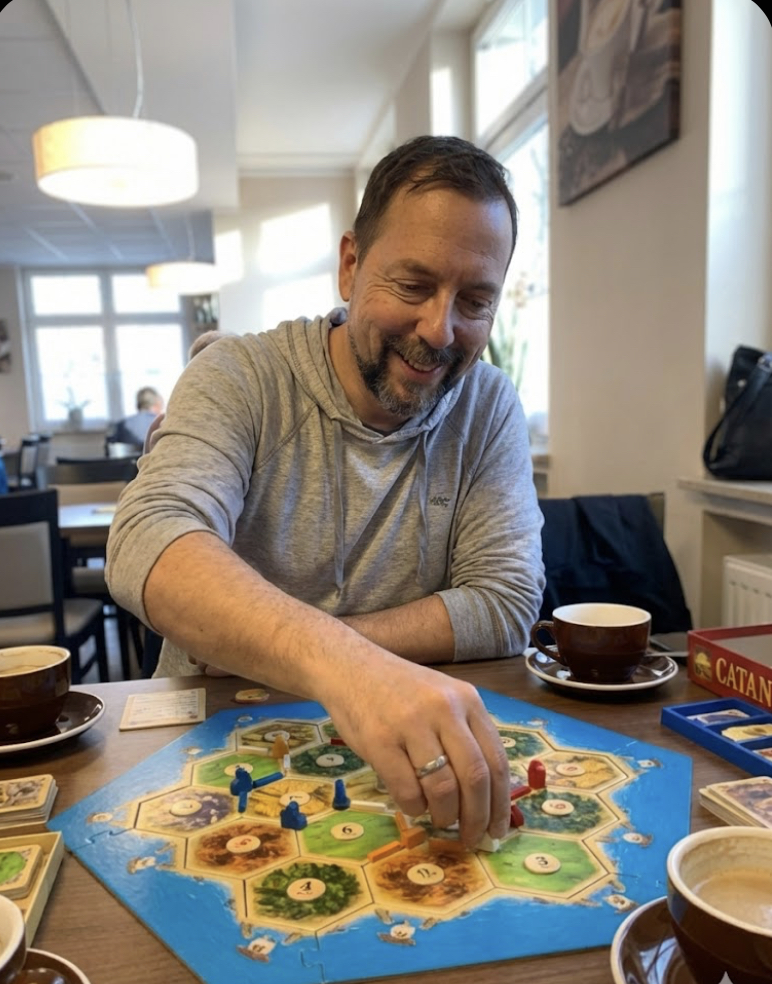
Resource Management and Negotiation (Catan)
Settlers of Catan is, at its core, a lesson in scarcity. Resources are unevenly distributed, progress depends on negotiation, and success often comes from adapting to what the board gives you — not what you hoped for.
That is project management in disguise.
Catan reinforces skills like:
- Prioritizing based on constraints
- Negotiating without formal authority
- Building alliances while still protecting your objectives
In real projects, influence often matters more than control. Catan trains you to work within constraints, leverage relationships, and adjust strategy when the environment changes.
Financial Trade-Offs and Long-Term Planning (Monopoly)
Monopoly has a reputation for being ruthless, but beneath the surface it’s a powerful lesson in financial strategy and timing.
Players who spend everything too early often struggle later. Players who hoard resources without investing stall their progress.
That balance is familiar to any senior project manager.
Monopoly highlights:
- Cash flow versus long-term investment
- Risk tolerance and timing
- The compounding impact of early decisions
In projects, budget decisions made early can shape outcomes months or years later. Monopoly makes those consequences impossible to ignore.
Managing Fixed Timelines and Life Events (Payday)
Payday is often underestimated, but it offers a surprisingly realistic simulation of financial planning within fixed deadlines. You know when payday is coming, but unexpected expenses, choices, and trade-offs along the way determine whether you succeed.
That’s project scheduling in a nutshell.
Payday reinforces:
- Planning around immovable milestones
- Managing personal and external pressures
- Understanding that “on time” doesn’t always mean “on budget”
Projects rarely fail because of one big mistake — they fail because of many small decisions made without considering the timeline.
Learning Through Consequences and Recovery (Video Games)
Video games, especially strategy and simulation games, teach players to expect failure as part of progress. You try, fail, learn, and iterate.
That mindset is invaluable in project management.
Games normalize:
- Iteration over perfection
- Fast feedback loops
- Recovery instead of blame
This has directly influenced how I handle project risks and retrospectives — focusing less on fault and more on adaptation.
One Last Thing…
I’m not suggesting that playing games replaces formal project management training. Experience, frameworks, and professional development matter.
But games like Chess, Catan, Monopoly, and Super Mario Bros quietly build many of the same skills great project managers rely on every day:
- Strategic foresight
- Resource and financial management
- Negotiation and influence
- Risk awareness and adaptability
Sometimes the best leadership lessons don’t come from a methodology; they come from play.